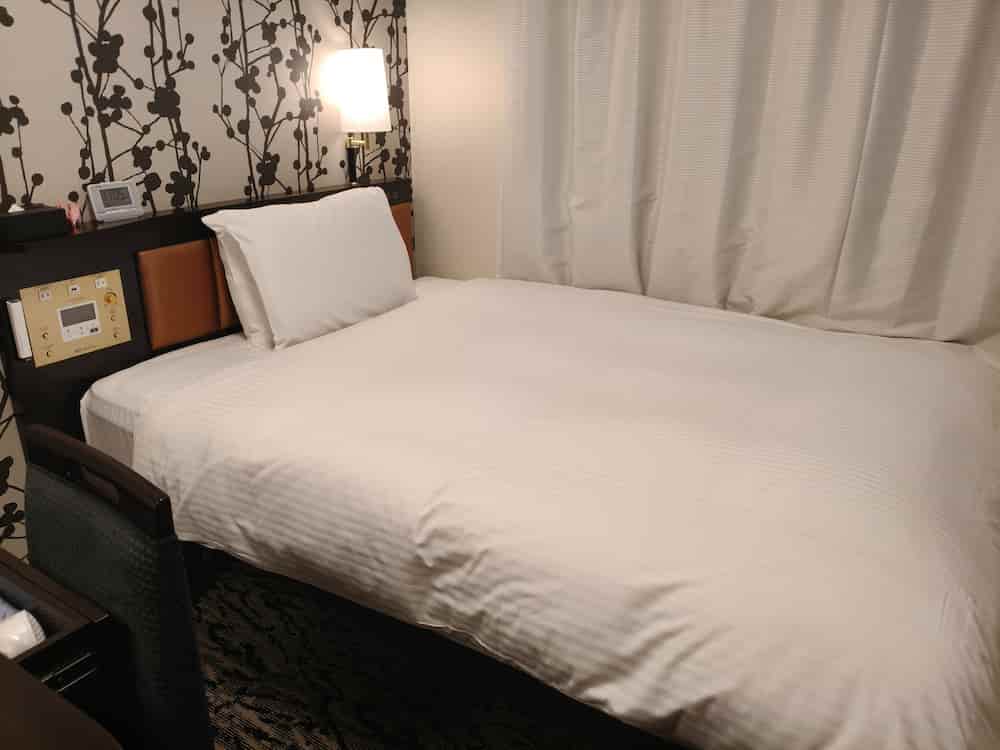
If you stay at APA Hotels often, you may start to notice something interesting:
the clever use of vertical patterns and horizontal patterns throughout the room.
These directional choices may not be accidental.
In design psychology, the direction of lines is believed to influence how a space feels.
With that in mind, I’d like to explore how APA might be using these principles
to make compact rooms feel more comfortable.
① Vertical Patterns May Create a Sense of Height
Vertical lines tend to draw the eye upward.
Because of this, walls with vertical patterns may make the ceiling feel a little higher,
which can reduce the feeling of being in a small space.
In some APA properties, especially around the bed area,
you might notice vertical textures that create a subtle “upward flow.”
If you haven’t consciously noticed this before,
it might be interesting to take a look during your next stay.
② Horizontal Patterns May Emphasize Width
Horizontal patterns, on the other hand, guide the eye from left to right.
In a compact room, this can help create an impression of width or openness.
APA seems to use horizontal patterns frequently—
especially on the desk-side wall and on the curtains near the window—
perhaps to encourage a feeling of lateral spaciousness.
For travelers who spend time working at the desk,
have you ever felt that the space didn’t feel as tight as you expected?
The horizontal flow of the patterns may be one reason for that.
③ Why Combine Vertical and Horizontal Patterns?
What’s fascinating about APA rooms is that
they don’t choose one direction over the other.
Instead, both vertical and horizontal elements coexist, creating a balanced rhythm.
For example:
- Bedside wall: geometric or vertically emphasized
- Desk side: horizontal flow
- Curtains: consistently horizontal
- Entrance side: neutral or low-pattern for visual rest
This mix of directions may:
- add rhythm to how the eye moves
- distribute visual weight
- prevent the room from feeling flat
- blend height and width in a balanced way
Taken together, it may contribute to the feeling that the room is more open than expected.
④ The Arrangement May Be More Intentional Than It First Appears
Although APA rooms are not large,
the thoughtful blend of vertical and horizontal directions
seems to mitigate the limitations of the physical space.
Vertical patterns subtly add height,
horizontal ones bring width,
and neutral surfaces provide calm.
It feels as if each direction has a specific “role,”
working together to shape the overall atmosphere of the room.
◆ Chapter 2 Summary — A Question for You
Even small details like the direction of patterns
may have a noticeable impact on the way we perceive space.
If you stay at APA again,
try paying attention to the “directionality” of the walls and curtains.
Which patterns contribute most to your sense of openness or comfort?
コメント