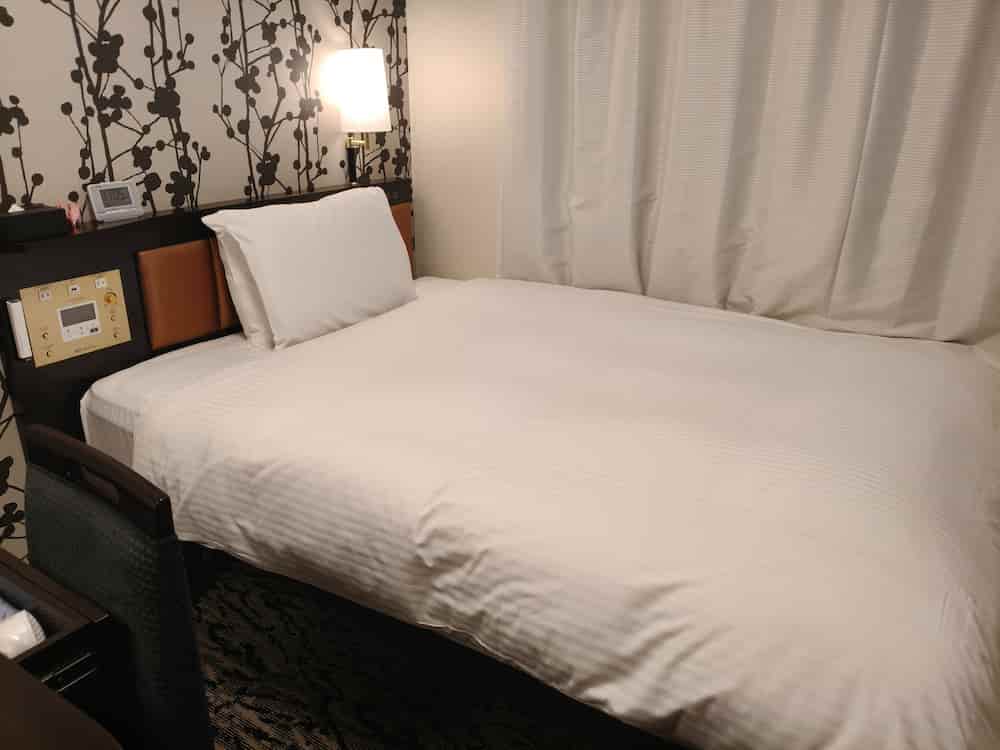
1. The Resort Model: APA’s Ideal Form
Among the various APA Hotel formats, the resort type represents the brand’s idea of how a stay should feel.
With hot springs, large baths, pools, and spacious rooms, these hotels are designed for experiencing your stay, not just spending the night.
Properties such as Tokyo Bay Makuhari and Kaga Katayamazu Onsen show this concept at scale.
Even for business travelers, the resort type offers a chance to unwind — a rare balance of comfort and convenience.
2. How It Differs from the Standard Model
Standard APA Hotels are typically located near train stations or business districts.
They prioritize efficiency — compact rooms, short walking routes, and minimal downtime.
While resort models emphasize space and relaxation, the standard type focuses on speed and simplicity.
Perfect for short stays, but less suited for those wanting to slow down.
3. How It Differs from the Renovated (Converted) Model
The converted or “inherited” model transforms existing hotels into APA-branded properties.
Room layouts and facilities vary, but the concept allows quick, cost-efficient expansion.
Compared with the unified, well-finished resort properties, these hotels retain more local character.
They work well for budget-conscious or longer stays, though consistency can vary.
4. Summary
Each model has its role — the standard type for quick business trips, the converted type for affordable access,
and the resort type for guests who want to enjoy their stay.
The resort model embodies APA’s highest expression of comfort — once you experience it,
you’ll see the rest of the brand through a new lens.



コメント